
Full mouth dental implants are one of the most searched treatment options among patients with severe tooth loss, failing teeth, or long-term denture problems. Many people begin researching this topic because they are tired of removable dentures, tired of struggling to chew comfortably, or frustrated by a smile that no longer feels secure or natural.
From a patient perspective, the appeal is obvious. The idea of replacing most or all teeth with a fixed implant-supported solution sounds life-changing. But full mouth implant treatment is not a simple one-size-fits-all service. It is one of the most advanced and carefully planned areas of dentistry, because it involves not just replacing teeth, but rebuilding the way the mouth functions as a whole.
This is why treatment should not begin with the question “How many implants do I need?” The better question is “What kind of full mouth plan is appropriate for my current teeth, gums, bone, and bite?” The answer depends on anatomy, oral health, treatment goals, and long-term maintenance.
At Milim Dental, full mouth implant treatment is approached as a complete rehabilitation process rather than a quick fix. For patients researching implants, that makes a major difference because the success of the treatment depends on planning just as much as on surgery.
## **What are full mouth dental implants?**
Full mouth dental implants refer to treatment plans used to restore an entire upper arch, lower arch, or both when the existing teeth are missing, failing, or no longer stable long term. These treatments usually involve implants placed in strategic positions to support fixed restorations or carefully designed implant-supported prosthetic solutions.
Patients often hear terms like full arch implants, full mouth implants, or fixed teeth on implants. While these phrases are commonly used, the real treatment is more individualized than those labels suggest. Not every patient needs the same number of implants, the same design, or the same sequence of treatment.
The goal is not only to replace teeth visually. It is to restore chewing, improve comfort, support facial structure, improve confidence, and create a bite that works more predictably. That is why full mouth treatment is both functional and aesthetic.
For many patients, the most important idea is this: full mouth implants are not just about “getting new teeth.” They are about rebuilding stability in a mouth that may have been compromised for a long time.
## **Who may be a good candidate?**
Patients who may be candidates for full mouth implants often fall into a few common groups. Some already have many missing teeth and are struggling with unstable dentures. Others still have teeth, but those teeth may be heavily damaged, mobile, infected, or unlikely to remain healthy long term. Some patients have spent years trying to maintain compromised teeth and are now looking for a more stable long-term plan.
This treatment may also be considered by patients who feel embarrassed by their smile, avoid certain foods, or are tired of living with ongoing dental problems. In those cases, the desire for full mouth implants is not only cosmetic. It is also emotional and functional. They want confidence, comfort, and less day-to-day frustration.
However, not every patient is automatically ready for a fixed full mouth implant solution. Bone condition, gum health, systemic health, smoking, oral hygiene, and bite forces all matter. Some patients may need more advanced planning because of bone loss or previous dental history. Others may need staged treatment before the final full mouth plan becomes possible.
At Milim Dental, suitability is not based only on the patient’s wish to “start over.” It is based on whether the full mouth implant plan is genuinely appropriate and sustainable.
## **How is full mouth implant treatment planned?**
Planning begins with detailed diagnosis. The dentist evaluates remaining teeth, gum condition, jaw relationships, bite, smile line, bone availability, and overall oral health. Imaging, especially three-dimensional imaging when appropriate, often plays a key role because it helps show what support is available and what type of implant strategy may be possible.
This stage is essential because full mouth treatment is not only about placing implants. It is also about deciding what should be removed, what can be preserved if anything, where support is strongest, and how the future teeth will be designed. A strong final result begins with a very thoughtful first assessment.
Patients often want to know immediately whether they will receive temporary fixed teeth, how many visits will be needed, and how soon the final restorations can be completed. Those are valid questions, but they can only be answered responsibly after proper diagnosis. Some full mouth cases can move more quickly than others. Some need more time because stability, healing, or tissue conditions demand it.
At Milim Dental, treatment planning is treated as the foundation of success. The goal is not to force every patient into the same model, but to build the most appropriate structure for that specific mouth.
## **Can full mouth implants be done quickly?**
This is one of the biggest patient concerns. Many people want to know whether the treatment can be done “in one day” or whether they will leave with teeth immediately. In some cases, immediate temporary teeth may be possible. In other cases, a more cautious staged plan is safer and more predictable.
The right answer depends on implant stability, bone quality, infection control, extraction needs, and the overall complexity of the rehabilitation. A fast plan can be very attractive, but speed alone should never determine the treatment. What matters is whether the mouth can support that speed safely.
Patients should also understand that immediate temporary teeth and final teeth are not the same thing. Even when early fixed teeth are possible, the final restorations usually come later, after healing and further evaluation. This is part of the biological process, not a sign that treatment is incomplete.
At Milim Dental, this distinction is explained carefully because it protects patients from unrealistic expectations. Full mouth implants can be life-changing, but they should still follow sound clinical logic.
## **What are the advantages and the limitations?**
The biggest advantage of full mouth implants is stability. Many patients feel that they can chew more confidently, speak more comfortably, and smile more freely compared with removable dentures or a severely compromised dentition. The emotional effect can also be significant, because patients often describe feeling more secure and more like themselves again.
There is also a functional advantage. A well-planned implant-supported full mouth restoration can help distribute bite forces more effectively than unstable dental పరిస్థితing or loose prostheses. For patients who have struggled for years, this can be a major quality-of-life improvement.
But the limitations must also be discussed honestly. Full mouth implant treatment is complex. Not every patient has the same bone support, the same tissue health, or the same maintenance ability. Some cases require more advanced planning, more treatment stages, or a longer adaptation process. This is not a shortcut procedure.
At Milim Dental, these limits are not hidden. Patients usually feel more confident when they understand both the strengths and the responsibilities of full mouth implant treatment.
## **Why is maintenance so important afterward?**
A common misunderstanding is that once full mouth implants are placed, the difficult part is over forever. In reality, long-term success depends heavily on maintenance. Implant-supported restorations still need daily cleaning, regular check-ups, healthy gum support, and attention to bite function.
Patients with full mouth implants must be especially aware of hygiene because the restorations may feel stable even when surrounding tissues begin to struggle. If cleaning is neglected, inflammation and long-term complications can still develop. Good aftercare protects not only the implants, but the whole investment in treatment.
Maintenance also includes professional reviews. Even if a patient feels comfortable, the dentist may detect issues with hygiene access, bite balance, or tissue health before the patient notices anything. These reviews help protect the result over time.
At Milim Dental, aftercare is treated as part of treatment quality. A full mouth case is only truly successful when it remains healthy and functional long after the restorative phase is complete.
## **Frequently Asked Questions**
### **Are full mouth dental implants suitable for everyone?**
No. Full mouth implants are not automatically suitable for every patient. Bone condition, gum health, systemic health, smoking habits, bite forces, and maintenance ability all influence the decision. Some patients are excellent candidates, while others may need more staged or alternative treatment planning. Proper diagnosis is essential before any responsible recommendation can be made.
### **Can patients get fixed teeth immediately?**
Sometimes, yes. In selected cases, temporary fixed teeth may be possible shortly after implant placement. However, this is not guaranteed in every case. Implant stability, bone support, infection level, and treatment complexity all affect the decision. Immediate temporary teeth and final restorations are also not the same thing.
### **How many implants are usually needed?**
There is no one number that fits every patient. The number depends on the arch involved, the available bone, the design of the future restoration, and the overall treatment strategy. Some full mouth cases use fewer implants in strategic positions, while others require a different distribution. The correct number is part of planning, not something that should be guessed in advance.
### **Is full mouth implant treatment painful?**
Patients can expect some post-surgical discomfort, swelling, and adaptation, especially when extractions or more extensive work are involved. However, the level of discomfort varies from patient to patient and from one treatment plan to another. Clear instructions, medications, and follow-up care are important parts of recovery. Most patients are more concerned before treatment than after they understand the process.
### **How long do full mouth implants last?**
There is no absolute universal answer. Long-term success depends on treatment planning, oral hygiene, maintenance, bite forces, general health, and regular professional follow-up. Well-planned and well-maintained implant-supported restorations can serve patients for many years. But they should never be thought of as something that requires no care.
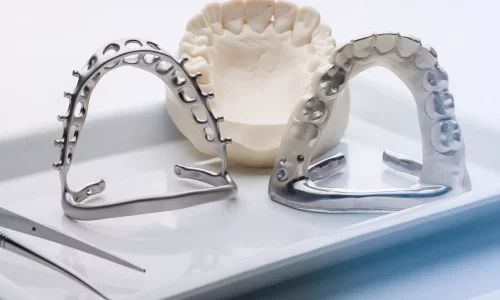
Discover the advancements that make modern subperiosteal implants more reliable than earlier versions.
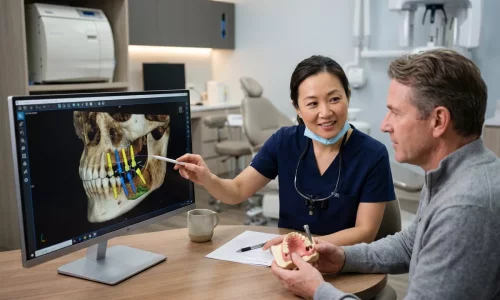
Explore how we plan implants for bone loss, using advanced imaging and grafting for a successful and durable outcome.
Afraid of starting braces or Invisalign treatment? Orthodontist Dr. Begum Ulasan addresses your most common fears, including pain, aesthetic concerns, and treatment duration. Discover how your orthodontic journey can be comfortable and effective.

Milim Dental Hospital isn't just a clinic—it's where confident smiles begin. With a team of world-class specialists, advanced technology, and a patient-first approach, we turn dental care into a premium experience.
We prioritize hygiene, comfort, and tailor-made treatments designed just for you. Don’t just take our word for it—explore real stories from real patients.
Your perfect smile starts here. Join the Milim experience.

Milim Dental Hospital provides comprehensive dental services in a spacious 1,000 m² facility, supported by a wide team of dental professionals including specialists in Oral and Maxillofacial Surgery, Prosthodontics, Orthodontics, Pediatric Dentistry, and Periodontology.